About
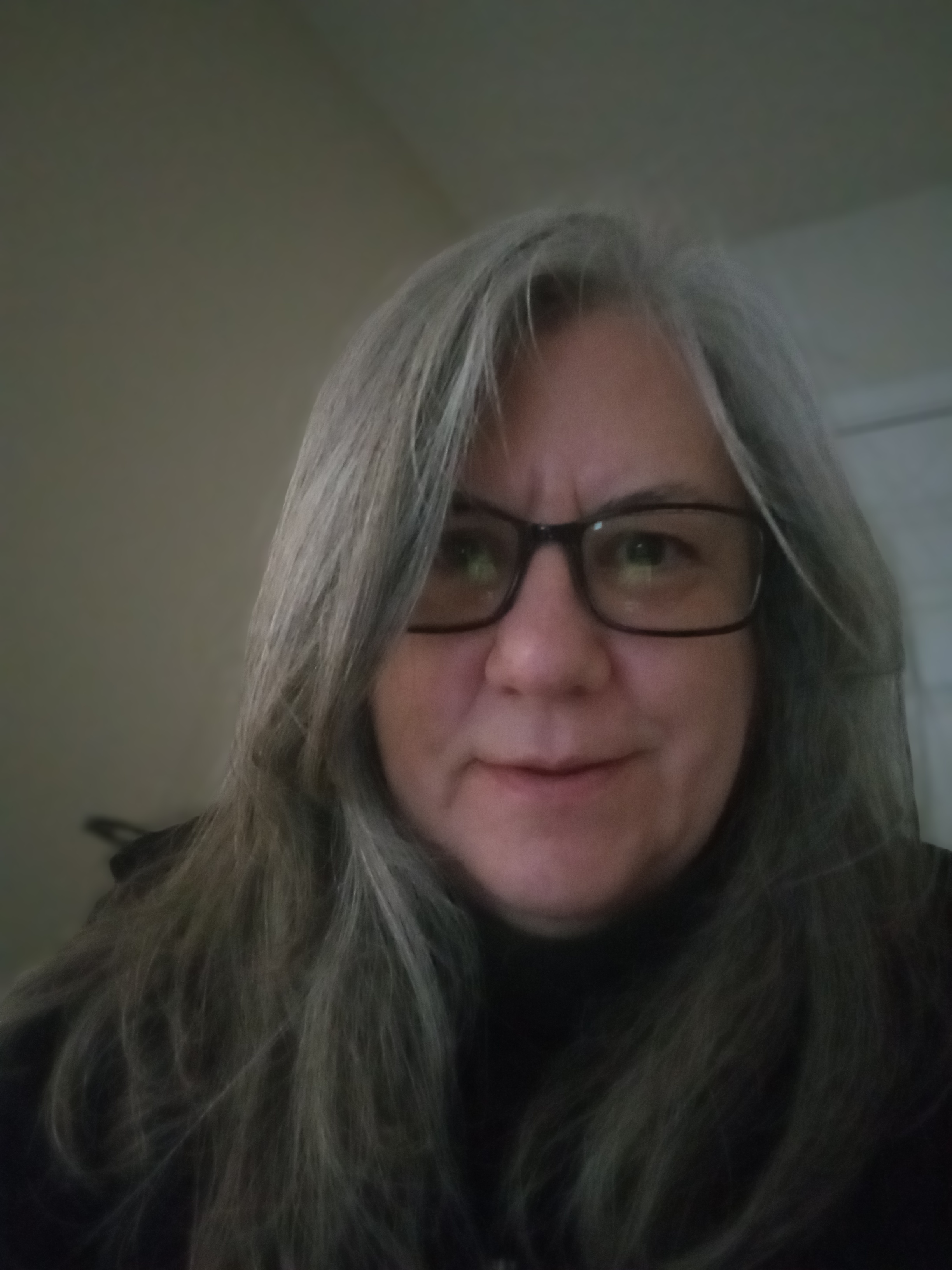
I am a scholar and educator in art history whose current research and teaching focus on craft history and intersections of art with conflict and war, disability, race, gender, and healing, particularly in U.S. and transnational contexts from the nineteenth century to the present
Current research projects
One current book project Craft and War: Makers, Users, and Craft Practices since the mid 19th century ( Bloomsbury, 2026) examines craft—in its fabrication, makers, users, and uses—engaging with wars since the mid-nineteenth century in sixteen essays that invite cross-national, cultural, and chronological comparisons.
A monograph project, Craft, wellness, and healing in contexts of war (under contract with Routledge, Research in Art History Series) examines craft deployed as a therapeutic modality and aesthetics of care for Americans coping, healing, and rehabilitating from traumas and injuries of war, including COVID-19. Research is supported by a Center for Craft Research Fund Project Grant.
Additional active research projects include:
“Transnational complexities of craft in the early Cold War: subjects of belonging and mobility,” chapter for A Cultural History of Asian Art (Vol. 6): 1920s – present, Editors: Wulan Dirgantoro (University of Melbourne), Pamela Karimi (University of Massachusetts, Dartmouth) (Courtauld, University of London, 2026), in progress
“Annemarie Pope and SITES: traveling exhibitions as pedagogy for American Cold War geographies,” in Rachel Eisner and Laia Anguix-Vilches, editors, The Museum is Me (Routledge, 2026), in progress
“The racial ambivalence of Lewis Wickes Hine’s interracial photograph of WW1 craft therapy,” in Rebecca Gill and Wendy Wiertz, editors, Craft in Extremis: Survival and Creativity in Modern War (Manchester University Press, 2026), in progress
Recent publications
“Chapter 7: Cultural actors in rehabilitation: WW2 craft therapy and White, ableist, heteronormative masculinity,” in Laure Humbert, Marie-Luce Desgrandchamps, and Bertrand Taithe, editors, Medical Care, Humanitarianism, and Intimacy in the Long Second World War, 1931-1953 (Cultural History of Modern War) (Manchester University Press, 2025), 341-382

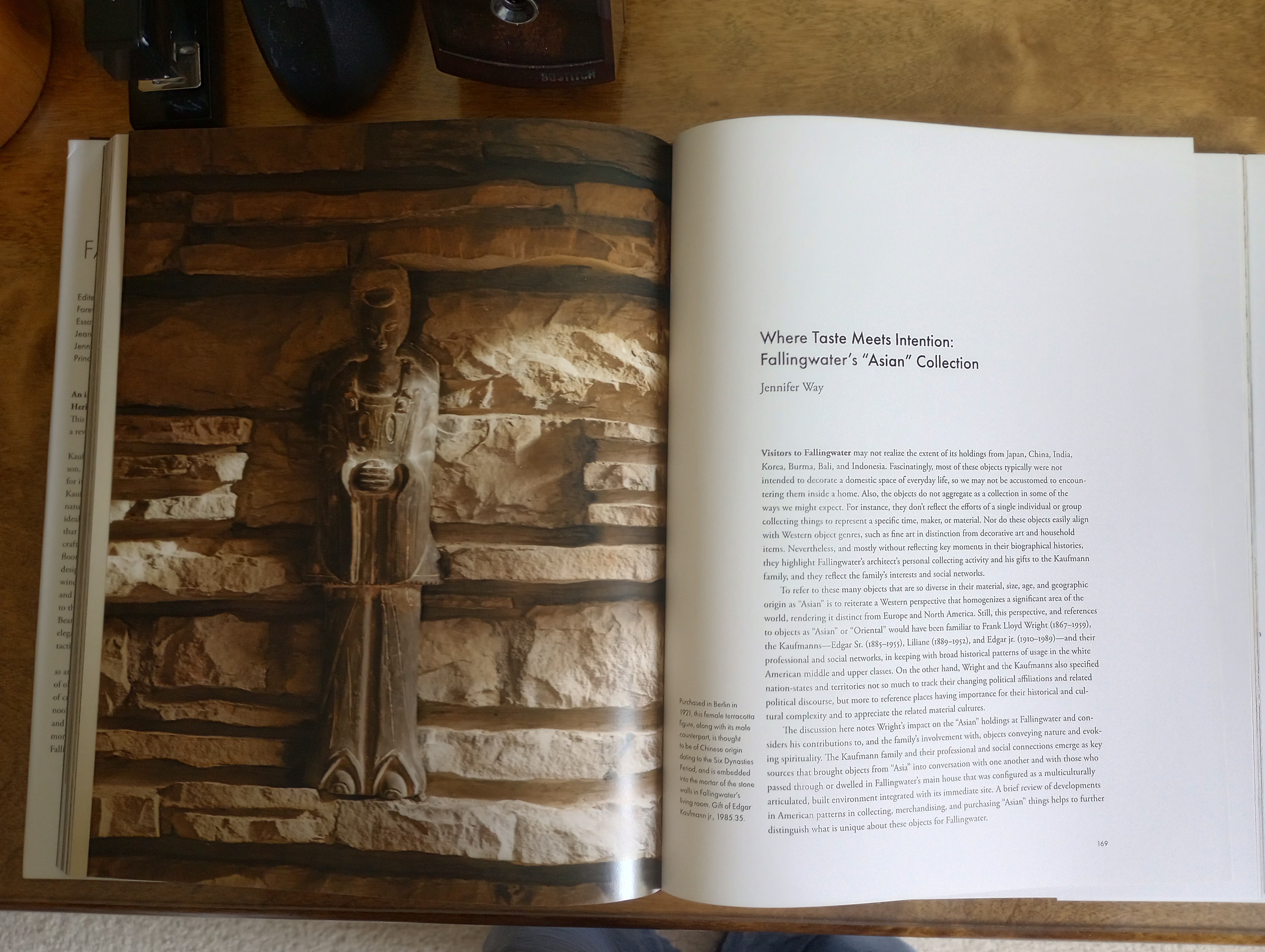
“Where Taste Meets Intention: Fallingwater’s ‘Asian’ Collection,” in Fallingwater: Living with and in Art, Gunther and Scott Perkins, editors (Rizzoli International Publications, 2025), 169-205

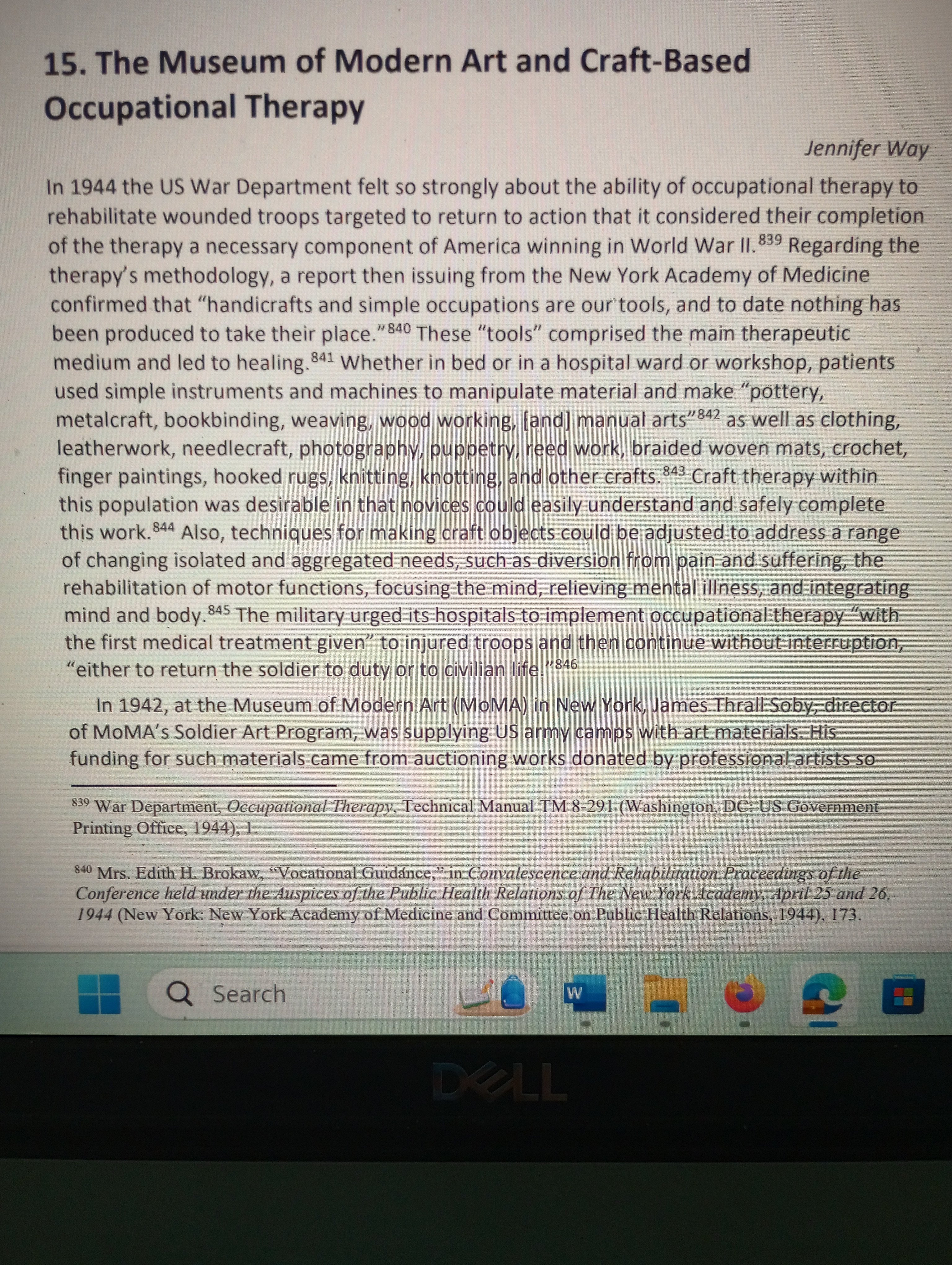
“The Museum of Modern Art and Craft-Based Occupational Therapy,” Chapter 15 in Modernism, Art, Therapy, edited by Suzanne Hudson and Tanya Sheehan (New Haven: Yale University Press, 2024) https://aaeportal.com/?id=-32162;

“From salvaging to merchandising—Vietnamese craft on display in America, 1956-1958,” in Verity Clarkson, Harriet Atkinson, and Sarah Lichtman (eds.) Exhibitions beyond Boundaries: Transnational Exchanges through Art, Architecture, and Design from 1945 (Bloomsbury Academic Press, 2023), 39-58


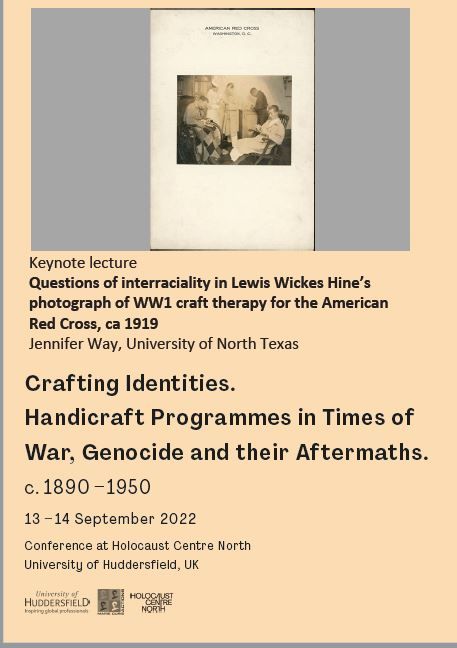
Questions of interraciality in Lewis Wickes Hine’s photograph of WW1 craft therapy for the American Red Cross, Keynote presentation for Crafting Identities: Handicraft Programmes in Times of War, Genocide and their Aftermaths, c.1890-1950, University of Huddersfield, UK, 2022
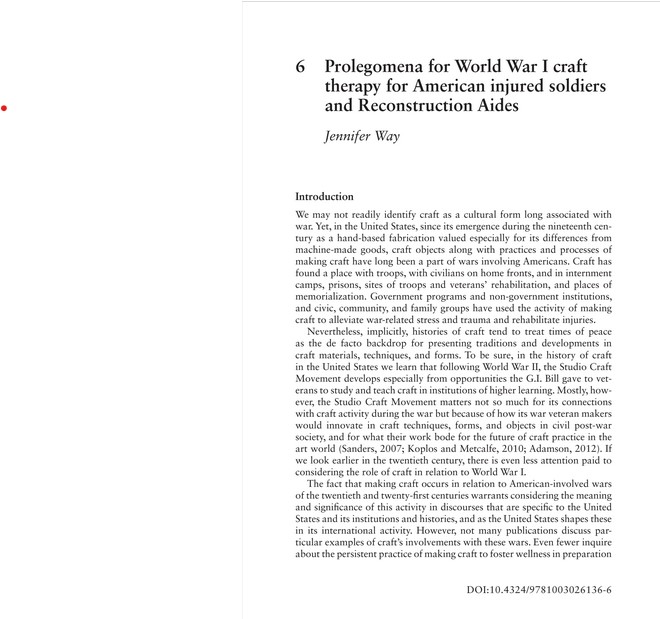

“Prolegomena for craft therapy during World War 1,” in Encountering Craft: Methodological Approaches from Anthropology, Art History, and Design, edited by Chandan Bose and Mira Mohsini (Routledge, 2023), 93-113


“Subjects of industry: craft therapy, its photography, and healing American soldiers of World War 1,” in by Micky Lee, Pat Reeve, Frank Rudy Cooper (eds.) Dis/ability in media, law, and history: Embodied AND socially constructed (Routledge Taylor & Francis, 2022), 59-75.


“Healing WW1 Soldiers with Craft Therapy and its Photographic Narratives of Masculine Ableism and White Privilege,” Special issue: Material Cultures of Sickness, Health, and Healing, in Material Culture, The Journal of the International Society for Landscape, Place, & Material Culture 53 no.2 (Fall 2021), 34-54

My book, Politics of Vietnamese Craft: American Diplomacy and Domestication (Bloomsbury, 2019), examines how Americans appropriated a foreign art form in programs that intersected their diplomatic agendas and domestic life with South Vietnam on questions of Vietnamese belonging in the Free World from about 1955 to 1961.
In relation to this work I also published:
“From salvaging to merchandising—Vietnamese craft on display in America, 1956-1958,” Verity Clarkson, Harriet Atkinson, Sarah Lichtman (eds.) Exhibitions beyond Boundaries: Transnational Exchanges through Art, Architecture, and Design from 1945 (Bloomsbury Academic Press, 2023), 39-58
“Allaying Terror: Domesticating Vietnamese Refugee Artisans as Subjects of American Diplomacy,” Pictures and Conflicts since 1945, special issue of Humanities 7 no. 3 (2018) https://doi.org/10.3390/h7030077
“American Design Diplomacy in South Vietnam, 1956: Gender as a Diplomatic Relation,” special issue of REGAC Revistas de Estudios Globales & Arte Contemporáneo on “Cold War networks and circulations: Cross-cultural Dialogues and Practices throughout the Global South (1957-1991)” 5 no. 1 (2017-2018): 93-116
“Mobilizing Craft: Diplomacy in the International Turn of American Art History,” Modos: Historia da Arte: Modos de Ver, Exhibir e Comprender Sao Paolo, Brazil 2 no. 1, 2018, 67-82
“The Liminal Collection: Vietnamese Handicraft at the Smithsonian,” Verge: Studies in Global Asias, Collecting Asias, Special Issue edited by Charlotte Eubanks and Jonathan Abe 1 no. 2 (2015): 115-135
“‘A Bazaar in the Coliseum’: Marketing Southeast Asian Handicrafts in New York, 1956,” Open Arts Journal 2: Architecture of Display section (Open University, 2013
“Orientalizing Vietnam: The American Cold War, Its ‘Problems’ with Refugee Handicraft Artisans, and their Relationship to Barthes’s Mythologies,” Special Issue – “Orientalisms,” Altre modernità/ Otras modernidades/ Autres modernités/ Other Modernities no. 8 (University of Milan, 2012): 94–120
“‘Gold Mine in Southeast Asia’: Russel Wright, Vietnamese Handicraft, and Transnational Consumption,” in Cynthia Mills, Lee Glazer, and Amelia A. Goerlitz, editors, ‘A Long and Tumultuous Relationship’: East-West Interchanges in American Art (Washington, D.C.: Smithsonian Institution Scholarly Press, 2012), 158–173
“Russel Wright and Handicraft: Transnational Collecting Practices,” Collections: A Journal for Museum and Archives Professionals 5 no. 2 (Alta Mira Press, Spring 2009):103–126
My publications also explore the work of Irish (Sean Hillen, Irelantis), British (Tracy Emin, Eduardo Paolozzi), and American artists (Whitfield Lovell) active since 1945 as well as art and technology, with emphasis on gender. Examples include
“Visualizing Dublin, ‘O’Connell Street as the “Nation’s Main Street’,” in Eamon Maher, editor, Reimagining Ireland: A Reader, (Peter Lang, 2017), 197-220
“O’Connell Street as the ‘Nation’s Main Street’: The Image of Ireland’s Modernity and Irelantis,” in Justin Carville, editor, Visualizing Dublin: Visual Culture, Modernity and the Representation of Urban Space, Re-Imagining Ireland Series (Peter Lang, 2014), 221-245
“Tracey Emin’s Photographs and Films of Turkey and Cyprus,” in Liz Wells, Theopisti Stylianou, and Nicos Philippou, editors, Photography and Cyprus: Time, Place and Identity (New York and London: I.B. Tauris, 2014), 193–217
“Digital Art at the Interface of Technology and Gender,” Chapter 6, in Christiane Paul, editor, a Companion to Digital Art (Blackwell Companions to Art History) (John Wiley and Sons, 2016), 181- 20
“Reading [Eduardo Paolozzi’s] Psychological Atlas Transnationally,” Visual Culture in Britain 13 no. 2 (2012), 227-247
“Reterritorialization and Whispers from the Walls,” Journal of Material Culture 9 no. 3 (Sage, 2004): 219–236
“Back to the Future: Women Art Technology,” Cyberfeminism 2.0 (Digital Formations Series) (Peter Lang, 2012), 196–22
“The Nation of Irelantis: Ireland as Elsewhere,” Journal of European Popular Culture 1 no. 2 (Intellect, December 2010): 89–107
with Morehshin Allahyari, “Digital/New Media Art and Contemporary Iran: Questions of Gender,” Special Issue, “Tracing New/Media/Feminisms,” Media N: Journal of the New Media Caucus Association (New Media Caucus, 2013): 16–25
“‘Imaginings’ of Geography: Devolution, Americanisation, and Works of Art writing and Culture,” Third Text 20 no. 2 (Routledge, March 2006): 223–232
“Negotiating the ‘Resemblances of Surfaces’: Painterly Abstract Painting and Consumer Culture, ca 1945–1965,” Review of Radical Economics 36 no. 4 (Sage, December 2004): 487–505
I am sincerely grateful for support for research and teaching from an Archives of American Art Kress Fellowship; Trinity College, Dublin, Fulbright Senior Fellowship Award Fellowship Council for the International Exchange for Scholars; Clinton Institute for American Studies, University College Dublin; National Gallery of Modern Art, Edinburgh; Institute of International Visual Arts, London; Smithsonian National American Art Museum (Terra Foundation Senior Fellowship); Lemelson Center for Study of Invention and Innovation, Smithsonian National Museum of American History, Washington, D.C.; Newberry Library, Chicago, and Center for Crafts, Asheville.
Teaching
At my current institution I recently advanced the undergraduate and graduate art history curriculum by establishing craft history as a core area of study using a critical framework attentive to social justice, civil rights, conflict, ableism, and gender and class equity in my course, Craft and Conflict.
Additionally, I recently designed and delivered a multi-course curricular concentration examining art and art history’s relationships to healing, care, wellness, health, and medicine, engaging sustained questions of subjectivity, representation, ethics, normativity, disability, narrative, and social justice in the courses Disability and Photography, American Art and Healing, Caring and Politics of Belonging.
These courses incorporate interdisciplinary frameworks, critical historiography, and primary source-based student learning, as does my Methodologies of Art History course.
Leadership
For Panorama, Journal of the Association of Historians of American Art, I served as an inaugural co-editor of Digital Dialogues, a section for critical commentary concerning born-digital, virtual initiatives, and data-driven scholarship impacting American art history. For the College Art Association, I am a member of the Services to Historians of Visual Arts Committee, a Professional Committee. Previously, I served as a member of the Council of Readers evaluating proposed sessions and papers for the annual conference. I earned a certificate for completing the Inclusion, Equity, and Community Building program at my university and subsequently served as a member of the inaugural Diversity and Inclusion Council for my college. At the University of North Texas I developed collaborative, interdisciplinary academic projects in partnership with members of my college and university, and with the greater Dallas Fort Worth community and organizations located outside region. Selected examples include the public interview series, Conversations: Art, Politics & North Texas; the symposium, Leadership Perspectives on Technology and Art; student teaching for the Virtual Senior Center, NYC; and Collections Cultures and Collaborations, a student-research, collections-based project collaborating with local museums and collecting organizations.
I supervised over 60 MA art history projects, participated as a member on numerous MFA committees, and created and taught more than 30 seminar topics and 15 upper-level art history courses. Numerous scholars and artists have visited with students in my courses. I received a university award for mentoring students in research, and a university award for teaching. I served as PI and Co-PI for external and internal grants and fellowships including those listed and from the Design History Society, Humanities Texas (formerly Texas Council for the Humanities) a state affiliate of the National Endowment for the Humanities, Edward and Betty Marcus Digital Education Project for Texas Art Museums Grant, and Yale Center for British Art.
In my university leadership and service I promote inclusion, gender equity, the faculty voice in policy, and accessibility of information in the workplace environment. Working across the university, I developed a cohort group to report on the status of women faculty. I originated the Art History Department’s 4+1 BA/MA degree track that mentors high-achieving undergraduate art history majors to begin their program of graduate art history studies during their senior year. I oversaw merit, promotion, and tenure processes for my college and program and mentored probationary faculty through tenure. I served as program coordinator for art history, chaired academic search committees, and supervised college academic, gallery, and ad hoc policy and grievance committees, among others.
Peer reviewing
My reviewing work includes conference proposals, grants, and manuscripts for the College Art Association, Council on Undergraduate Research, European Science Foundation, HERA– Humanities in the European Research Area’s Joint Research Programmed, Danish Council for Independent Research, Ministry of Higher Education and Science, Danish Agency for Science, Technology and Innovation, Bloomsbury Academic Press, and University of Washington Press, and for academic journals such as Folklore, Irish Studies Review, Feminist Media Histories, Journal of Curatorial Studies, Art Journal, and American Art Journal, and Journal of Modern Craft and Journal of Southeast Asian Studies.
Thank you!
I would like to thank the many wonderful colleagues and students whom I have had the good fortune to know and work with over the years, and to whose books, projects, and conference sessions I am grateful to have had the opportunity to contribute. Your work continues to provide inspiration and a standard of excellence to which I aspire – thank you!
 Jennifer Way, PhD
You must be logged in to post a comment.